

Electrical Meter Box Replacement in North Miami Beach, FL
In South Florida, preparing for hurricane season is a year-round concern, and the integrity of your home’s electrical service is a critical part of that readiness. This starts with understanding who is responsible for the equipment that powers your home.
A common point of confusion for homeowners is the line between their property and Florida Power & Light’s (FPL) property. Think of it this way: FPL owns the “lock” (the actual meter), but you own the “door and frame” it sits in. This means the meter box, often called a meter can, is your responsibility. So are the service stack or riser pipe that runs up the side of your house and the hardware attaching it all.
This division of ownership has a significant consequence. If your equipment is damaged, FPL will not restore power or install a new meter. The FPL meter repair requirements mandate that the homeowner’s equipment must first be repaired by a professional, brought up to current code, and officially inspected by the city. This equipment, which includes everything from the weatherhead down to the meter socket, must be maintained properly, and a professional meter can replacement is often the required solution. Understanding this responsibility is the first step in quickly and safely restoring power after an issue arises.
Signs It’s Time for a Meter Box Replacement
Knowing what to look for can help you address meter box issues before they lead to a prolonged outage or a serious safety hazard. While some signs are obvious after a storm, others develop slowly over time due to our coastal environment. Here are the key indicators that you may need an electrical meter box replacement in North Miami Beach.
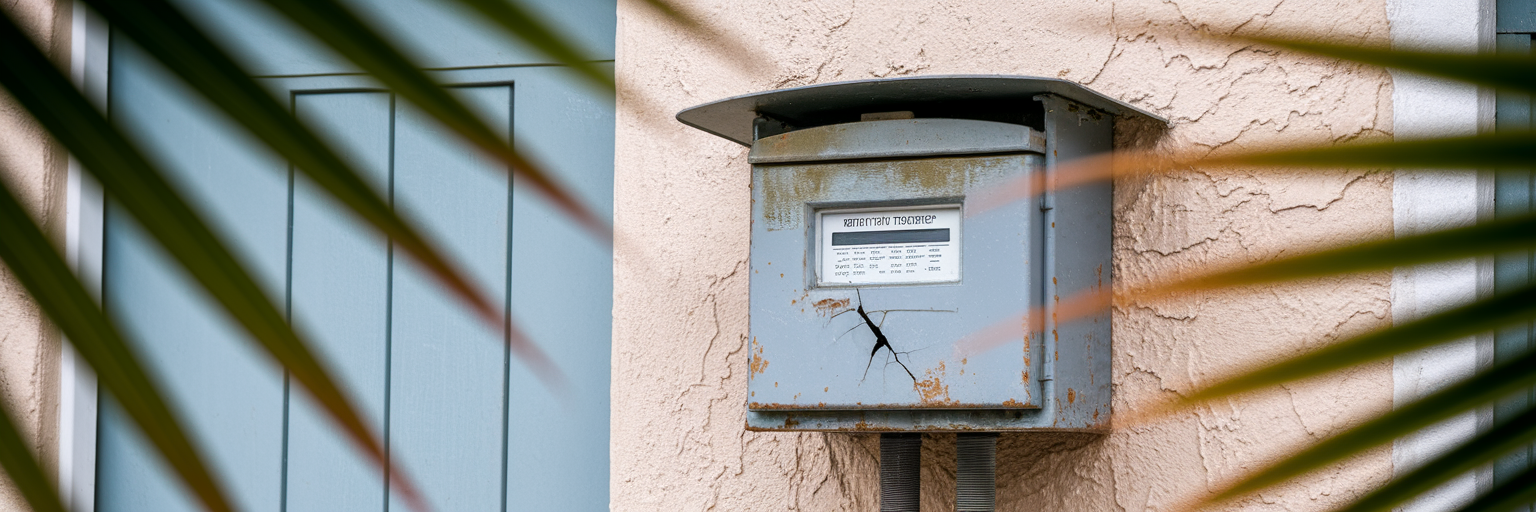
- Physical Damage: After a storm or accidental impact, look for a meter box that is pulled away from the wall, a bent or detached conduit pipe, cracked glass on the meter, or any visible exposed wiring. This type of storm damage electrical service is common and requires immediate attention to prevent water intrusion and further hazards.
- Corrosion and Water Intrusion: North Miami Beach’s humid, salty air is tough on outdoor metal. Check your meter box for rust stains, bubbling paint, or visible moisture inside the box. Water and electricity are a dangerous combination, and corrosion can compromise the electrical connections within the socket.
- Flickering Lights or Power Issues: While flickering lights can have many causes, inconsistent power can sometimes be traced back to a faulty connection at the meter base. If your lights dim when a large appliance turns on or you experience intermittent power loss, the connections in your meter socket may be loose or corroded.
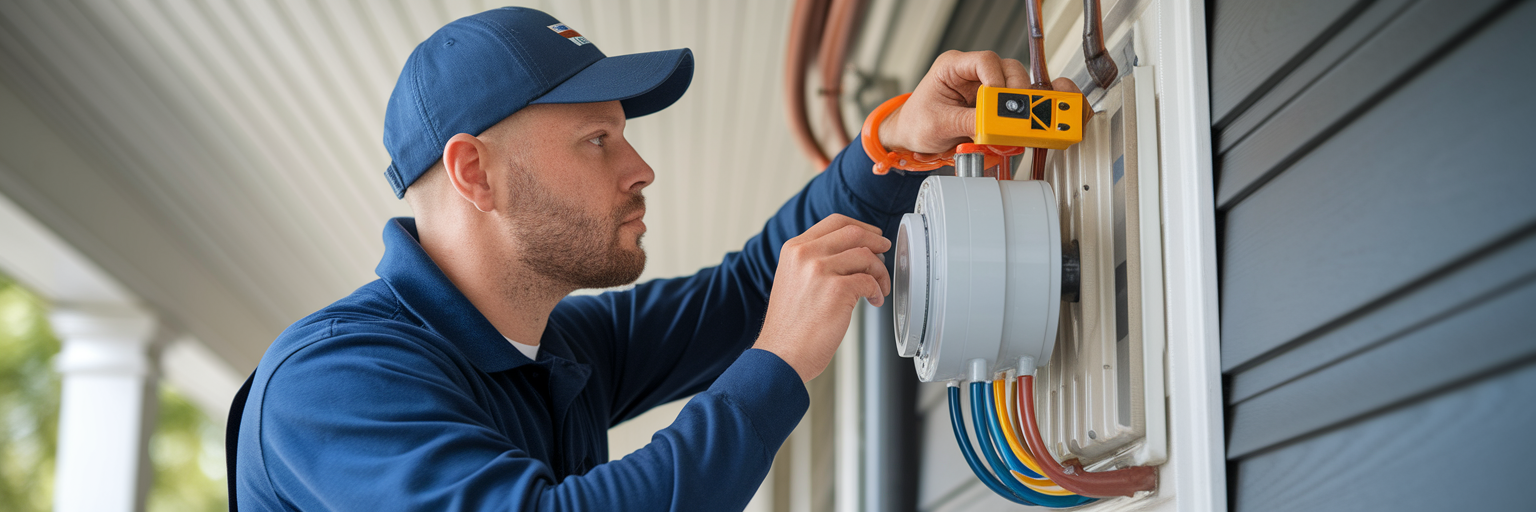
- Mandatory Utility Upgrades: Sometimes, a replacement is not prompted by damage but by progress. As FPL rolls out new technology like smart meters, older meter boxes may not be compatible. An upgrade may be necessary to accommodate the new equipment and ensure your service remains compliant. A properly installed new meter box will be secure and weatherproof, as seen in examples of our completed projects.
The Correct Process for Meter Box Replacement
When your meter box is damaged, restoring power isn’t as simple as calling FPL. There is a specific, legally required process that must be followed to ensure safety and compliance. Attempting to bypass these steps is the most common reason homeowners face extended power outages. This work is not a DIY project and demands professional expertise.
Here is the correct sequence of events:
- Hire a Licensed Electrician: Florida law requires a licensed professional for this type of work. Hiring an unlicensed handyman is not only illegal but also risky. It can lead to failed inspections, unsafe conditions, and even greater delays. A licensed electrician in North Miami Beach understands the local codes and permitting process.
- Secure Permits and Complete Repairs: Your electrician will handle the entire permitting process with the City of North Miami Beach. This involves submitting the necessary applications and diagrams before replacing the damaged meter can, riser, and any other compromised components to meet the latest electrical codes.
- Pass the Municipal Inspection: This is a non-negotiable step. A city inspector must visit your property to verify that the new installation is safe and fully compliant with the National Electrical Code (NEC) and Florida Building Code (FBC). FPL will not touch your service until they receive official confirmation of a passed inspection.
If you’re facing any of these issues and need to start the replacement process, the first step is to contact a qualified professional.
| Stage of Process | Homeowner’s Responsibility (with Electrician) | FPL’s Responsibility |
|---|---|---|
| 1. Damage Identification | Identify damage and hire a licensed electrician. | None at this stage. |
| 2. Repair & Permitting | Electrician obtains city permits and replaces the meter box/riser. | Temporarily disconnects power for safety if needed. |
| 3. Code Inspection | Schedule and pass an inspection with the City of North Miami Beach. | Waits for official notification of a passed inspection. |
| 4. Reconnection | Notify FPL that the property is ready for service. | Installs the new meter and restores power. |
Meeting North Miami Beach’s Electrical Codes
A successful meter box replacement goes beyond simply swapping out old parts. The work must adhere to a strict set of technical rules designed to ensure the safety and durability of your electrical service. This is why hiring an expert who is deeply familiar with local requirements is so important. Your electrician is responsible for navigating these complex codes, but understanding what they entail can give you confidence in the quality of the job.
Key Technical and Placement Rules
The City of North Miami Beach has specific mandates that go beyond general electrical practices. For instance, overhead service risers typically require a minimum 2-inch rigid metal conduit (RMC/IMC) to provide sufficient strength against high winds. Another rule dictates that the meter socket should be placed within 10 feet of a building’s front corner. According to the City of North Miami Beach’s ‘Meter Can Repair Service Checklist,’ all work must comply with both local and national codes.
Service Disconnect and Labeling Requirements
Modern electrical codes also focus heavily on safety and accessibility. NEC 230.70 requires a main service disconnect that is readily accessible on the exterior of the building, allowing first responders to shut off power in an emergency. Furthermore, NEC 408.4 mandates that every circuit in your panel be clearly and legibly labeled. City inspectors check these details rigorously. This labeling is often done during an electrical panel change, ensuring your entire system is organized and up to code. Your contractor handles the submission of technical documents like riser diagrams and load calculations, managing the complexity so you don’t have to.
Cost Considerations and Finding a Qualified Electrician
When facing a necessary repair, one of the first questions is about cost. The cost to replace an electrical meter can is paid by the homeowner and includes the electrician’s labor and all materials, such as the new meter box, conduit, and wiring. The FPL meter itself is not part of this cost. To avoid surprises, always request a detailed, itemized quote that breaks down all charges.
However, the cheapest quote is not always the best value. The most critical factor is the quality and legitimacy of the contractor you hire. Before any work begins, verify the electrician’s license and insurance. This is your best protection against shoddy work, failed inspections, and potential liability. A project this vital to your home’s safety requires a contractor known for reliability and precision. To ensure your electrical system is safe, compliant, and handled by seasoned professionals, explore the comprehensive residential and commercial services offered by Pro-Precision Electrical Contracting LLC.