

Need an Electrical Panel Replacement in West Miami, Fl
Think of your electrical panel as the heart of your home. It takes the main power line from the utility company and methodically pumps electricity to every circuit, powering everything from your morning coffee maker to your air conditioner. Like any hardworking component, it has a finite lifespan. After that, their reliability starts to decline.
Here in West Miami, our homes face a unique challenge. The persistent, salty humidity from the coastal air is more than just a part of our lifestyle; it actively works against the metal components inside your panel. This moisture accelerates corrosion on the bus bars, breakers, and wiring connections. What might be a 40-year panel in a drier climate often shows signs of significant wear much sooner here.
Because of this, local homeowners must be especially vigilant. An electrical panel replacement in West Miami is often not just a distant upgrade but an essential step for maintaining a safe and functional home. This guide will help you recognize the specific signs that your panel is telling you it’s time for a change.
Warning Signs Your Electrical Panel Is Failing
While the previous section explained why panels degrade, this part is about what to look for. An aging electrical panel rarely fails without giving you some clear warnings. The first clues often appear as performance issues. You might notice your lights flicker whenever a large appliance like the AC kicks on. This isn’t just a minor annoyance; it’s your electrical system struggling to keep up.
Beyond performance glitches, there are more urgent physical and sensory warnings. We’ve seen these signs of a bad electrical panel in countless homes, and they always demand immediate attention. If you notice any of the following, it’s time to call a professional:
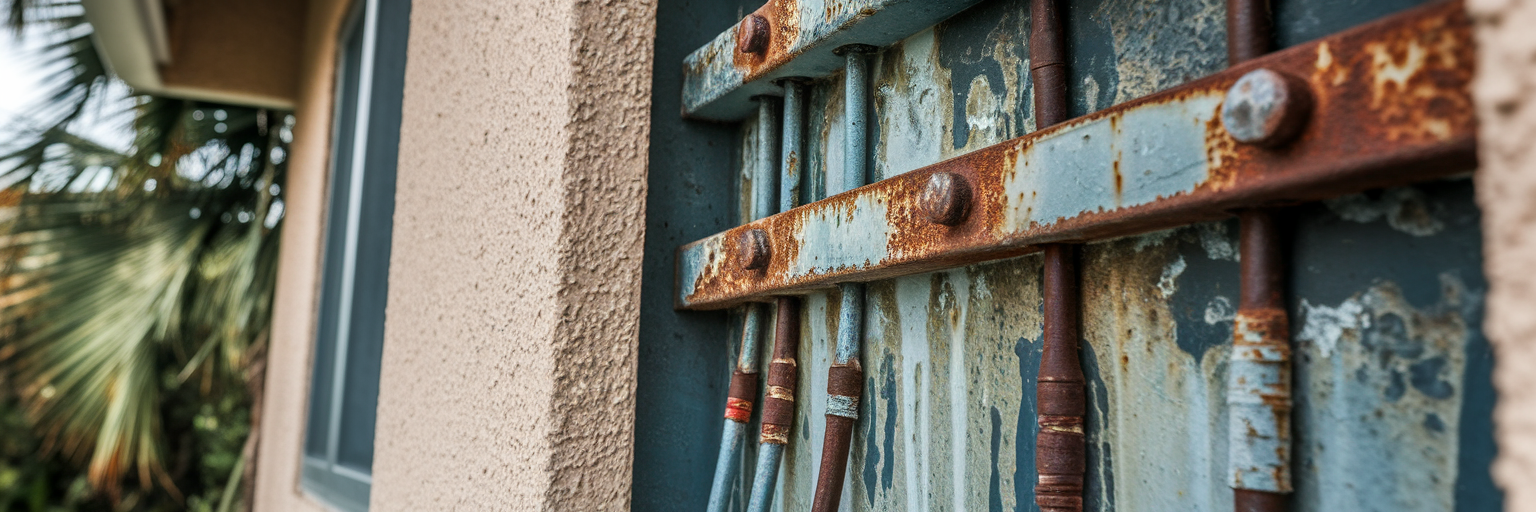
- Visible Rust and Corrosion: Take a look at your panel box. Do you see rust spots on the metal door or, more importantly, on the breakers inside? This is a direct result of moisture damage, a constant battle in South Florida, and it compromises the safety of the connections.
- Burning Odors or Scorch Marks: A faint but distinct burning smell coming from your panel is one of the most dangerous red flags. It indicates that wires are overheating and creating electrical arcs. You might even see black or brown scorch marks around a specific circuit breaker. This is a serious fire hazard.
- Audible Crackling or Buzzing: Your electrical panel should be silent. If you hear a persistent crackling, buzzing, or humming sound, it points to loose wiring or a failing breaker. These sounds are the audible evidence of an unsafe electrical connection.
- Outdated and Hazardous Technology: If your home still has an old-fashioned fuse box, an upgrade is long overdue. A Federal Pacific panel replacement, for example, is a critical safety measure, as these panels are notorious for failing to trip during an overcurrent event.
When Modern Lifestyles Outpace Your Panel’s Capacity
Sometimes, the issue isn’t a failing panel but one that’s simply outdated. Many older homes in West Miami were built with 100-amp panels, which were perfectly adequate for the electrical needs of the 1970s or 80s. Today, that’s a different story. Our reliance on technology, from home offices with multiple computers to modern kitchens and electric vehicles, places a demand on our electrical systems that these older panels were never designed to handle.
Are you planning a kitchen renovation or adding a new pool? Have you recently started charging an electric car at home? These upgrades add significant electrical loads that can push a 100-amp panel past its breaking point. This leads to more than just tripped breakers; it creates an ongoing risk of overheating. A 200 amp panel upgrade Miami homeowners are increasingly choosing is not a luxury. It is a necessary investment in safety and functionality, providing the power you need today with crucial headroom for tomorrow’s additions.
This table shows how quickly modern demands can add up:
| Appliance/System | Typical Amperage Draw | Impact on a 100-Amp Panel |
|---|---|---|
| Central Air Conditioning | 30-40 Amps | Consumes a significant portion of total capacity |
| Electric Vehicle (EV) Charger (Level 2) | 40-50 Amps | Can overload the panel when used with other major appliances |
| Pool Pump | 15-20 Amps | Adds a constant, heavy load during operation |
| Modern Kitchen (e.g., microwave + air fryer) | 15-25 Amps | Simultaneous use can easily trip breakers |
As you can see, it doesn’t take much to max out an older panel. Upgrading ensures your home can safely support your modern lifestyle.
Navigating Local Codes and Insurance Mandates
Beyond performance and capacity, there are external pressures that can make an electrical panel upgrade a non-negotiable task. South Florida’s building codes are among the strictest in the country for a reason. Our hurricane-prone environment requires robust electrical systems, and modern codes mandate specific grounding, bonding, and surge protection features that older panels simply do not have. A panel that isn’t up to code is not just a technical violation; it’s a safety deficiency.
Perhaps the most compelling reason for an upgrade comes from homeowner’s insurance providers. Insurers are becoming increasingly unwilling to write or renew policies for homes with outdated or notoriously hazardous panels. If your home has a Federal Pacific, Zinsco, or Sylvania panel, you may find it difficult or impossible to secure coverage due to their well-documented fire risk. We’ve seen homeowners receive non-renewal notices, leaving them scrambling to find a solution.
Furthermore, if you plan to sell your home, an outdated panel can become a major roadblock. It’s one of the first things a home inspector will flag, and it can deter potential buyers or derail financing. Postponing an upgrade can lead to failed inspections, denial of insurance coverage, and significant liability. When you consider these factors, the cost to upgrade electrical panel Florida becomes a proactive investment that protects you from much larger financial and safety risks down the road.
The Upgrade Process and Future-Proofing Your Home
Deciding to replace your electrical panel is a big step, but the process itself is straightforward when handled by a professional. We believe in making the experience as clear and manageable as possible for homeowners. It typically follows a simple path:
- Professional Inspection and Quote: A licensed electrician will assess your current panel, understand your electrical needs, and provide a detailed quote.
- Scheduling the Work: The work is scheduled at your convenience. A standard replacement usually takes a single day, with power being off for several hours.
- Permitting and Installation: We handle all necessary permits with the county. The old panel is removed, the new one is installed, and all circuits are reconnected and clearly labeled.
- Final County Inspection: A county inspector verifies that the installation meets all current electrical codes, ensuring the job was done right.
To help with budgeting, the typical cost for a 200-amp panel upgrade in the Miami-Dade area ranges from $1,200 to $3,500, depending on the complexity of the job. This investment not only resolves existing issues but also future-proofs your home. Modern panels provide the capacity for future additions like solar panels or smart home systems. Some new smart panels even offer energy monitoring directly from your phone.
Ultimately, a new electrical panel is an investment in your safety, your property’s value, and your peace of mind. Working with a qualified and licensed electrician in West Miami FL, like our team at Pro-Precision Electrical Contracting, ensures the entire process is handled correctly, safely, and in full compliance with local codes.