

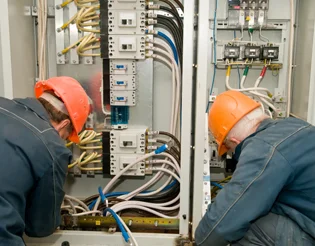
Residential Wiring for Additions in Sunrise, FL Homeowner Guide to Safe and Efficient Expansion
Sunrise, Florida homeowners who are looking to expand or add a room to their home will have a chance to do so — it’ll be bigger, it’ll be more comfortable, and it’ll be more valuable. One of the biggest mistakes people make when they add to their homes is not considering all the electrical work that will be involved. Additions are more than just simple add-ons at the end of a wire; they affect the permit process, electrical panel size and the safety of all the equipment behind.
These become more complicated in South Florida because to the climate. All of these environmental factors affect the design and installation of the system: year round cooling and heating usage, high humidity levels and increased demand for electricity during hurricane season. When you wire it the first time right, it helps you save money from rework which might be needed if you wire it the wrong way. This is the reason it is crucial to select the Best Residential Wiring Service in it when making plans for an addition or expansion to the home.

Why Sunrise home additions need a dedicated electrical plan
The majority of houses in Sunrise were constructed in the 70s through the early 2000s. Many are still on the 100 amp service panels installed at the time of the house’s construction — not the current time of high demand kitchen appliances and modern HVAC systems and EV chargers. Asking for tripped breakers, overheated connections or worse when you stack a new room on top of this stack without a proper assessment.
Electrical failures or malfunctions are one of the top causes of residential structure fires in the United States, according to the U.S. Fire Administration. The greatest measure of protection from those risks is a residential electrical system expansion completed by licensed contractors utilizing appropriate permits, and inspected by the city.
Florida’s 8th Edition Building Code , which took effect on December 31, 2023 , adopted the 2020 National Electrical Code (NEC), so all electrical work in Broward County has to follow these updated requirements. A professional Residential Wiring Service in Sunrise, FL kind of makes sure every installation sticks to the rules, including arc-fault circuit interrupter (AFCI) protection for bedroom and living-space circuits, plus GFCI protection in bathrooms, kitchens, and even outdoor areas. And sure, if the rest of your home was built earlier than these changes, the safety standards are still required for any new electrical work, which is why code-compliant installation really matters for safety , inspection approval , and long-term reliability.
Average time for residential projects to get permits in Broward County is 4 to 6 weeks. If the contractor gets to date with the construction, while paperwork is being caught up, work will stall and you’ll have wasted time.
Wiring options for room additions and what each one involves
This doesn’t mean that all additions have to be addressed in exactly the same manner when it comes to electricity. Rather, it would be fair to say that the most appropriate approach will depend on the space being added and its use, as well as the capabilities of your current panel without any problems arising.
The use of a single circuit extension can work well for a relatively small addition, such as a laundry room, a fairly modest home office, or a half bath. Essentially, in this case, an electrician creates one or two additional circuits from the existing panel. This can be done provided that there are free breaker spaces and enough amperage to be spared. If you plan on building something larger, subpanel installation could be considered the best option.
Of course, we also have the panel upgrade. This is the step you take once the existing service will no longer support the increase in the current draw. A jump from 100 amps to 200 amps would provide sufficient capacity for the entire home rather than just the addition. A licensed electrical contractor from Broward County will conduct a load test and then recommend an upgrade. This is always done in accordance with the findings, not on guesswork. An electrician who doesn’t follow this procedure should probably be called a shirk. Furthermore, older houses with knob-and-tube wiring, or old aluminum branch circuits tend to have to be rewired entirely when the walls get open.
| Wiring Option | Avg. Cost Range | Best For | Panel Impact | Permit Needed |
| Single-circuit extension | $300–$900 | Small rooms, closets | Low — uses existing capacity | Yes |
| Subpanel installation | $1,200–$2,500 | Large additions, detached spaces | Moderate — feeds from main panel | Yes |
| Main panel upgrade (100A→200A) | $1,400–$2,800 | Homes near capacity | Full service upgrade | Yes |
| Full rewire with addition | $8,000–$20,000+ | Homes with aging or unsafe wiring | Complete replacement | Yes |
Cost ranges sourced from HomeGuide (2024) and HomeWyse (2026), adjusted for South Florida labor market conditions.
What the process actually looks like from start to finish
Understanding the process helps you ask better questions and catch red flags in contractor quotes before you sign anything.
Load calculation is the starting point. A licensed electrician reviews your current panel, calculates what it already carries, and models what the addition will draw. This step determines whether the panel can absorb new circuits or whether an upgrade is part of the scope. Skipping it is not a shortcut — it is a liability.
After this comes the process of permit application. The first thing that needs to be done when adding a structure in Sunrise is getting a permit from the Building Department of either Broward County or City of Sunrise. This process will involve project description, load calculations, and rough-in circuit schematic. The task will be carried out by your electrician and not your contractor who will not delegate the task to you. As a matter of fact, this process usually involves normal building regulations and resembles a building permit system.
Rough-in wiring is done after the structure has been framed but before drywalls are mounted. The electrician mounts cables inside open wall frames, locates outlet and fixture junction boxes, and feeds home runs of circuits to panels. According to Estimate Florida Consulting Wikipedia Consulting (2024), electrical rough-in in additions is estimated to cost between $3.60 and $7.20 per square foot. Moreover, a city inspector needs to come and inspect the rough-in – the inspection can never be avoided according to the Florida Building Code.
After the trim-out and final connection, the electrical installation can be considered finished. Electricians install outlets, switches, and fixtures and mount breakers at panels, checking each circuit individually. A city inspector needs to sign off the installation and issue a certificate of occupancy and finalization of the permit.
What it costs to wire an addition in the Sunrise area
Labor rates for electrical work in South Florida are higher than average in the United States. Electricians in Sunrise and Broward County charge anywhere between $75 and $130 per hour based on their experience and the nature of the job.
The total cost for the full scope of electrical work, including roughing-in, trim-out, and permits, will fall somewhere between $4,000 and $9,000 for a modest addition in the size range of 400-600 square feet. The cost of upgrading the electrical panel will be around $1,400 to $2,800, while sub-panel installation will cost you between $1,200 and $2,500. Permits are priced at $50 to $350 in Florida, depending on the extent of your project.
Always obtain at least two separate quotes detailing the price. A one-line estimate without any cost breakdown is no indication of your total expenditure. What you need is a quote that separates labor charges from materials and permits.
How to find the right licensed electrician in Sunrise
It is more than merely an inconvenience when you make the mistake of hiring the wrong contractor to do your electrical work. Some consequences of doing so include failing inspections, dealing with insurance issues, and having to have wires removed and rewired because of mistakes made by the contractor you choose.
First of all, you should check to see if the contractor is licensed. All electrical contractors operating in Florida have to be licensed through the State as EC licensees. The Florida Electrical Contractor License Search can help you check on the status of a Florida Electrical Contractor license. An electrician who is just a general handyman cannot obtain a permit for this work, no matter how skilled he may be.
Also ask up front if they will pull the permit. If there is any hesitation, move on. Permits are for your protection.
The local experience counts in Broward County. For instance, the HVHZ (High Velocity Hurricane Zone) designation in effect for the area of Sunrise and vicinity requires higher conduit installation standards and more stringent product approval than the basic Florida Building Code demands. Knowledge of moisture rated materials, conduit choices and of what is expected by the inspectors in Broward County does not come automatically to anyone outside the area. Proprecisionelectric specializes in residential electric jobs in the Sunrise area and is used to dealing with all permitting and code considerations that arise during their work, thus eliminating delays. Even commercial building rewiring contractors who work in controlled environments must strictly adhere to code requirements just as residential electricians must.
General Liability Insurance and Workers Compensation Certificates should be up-to-date prior to commencing work.
Conclusion
Wiring a home addition in Sunrise is one of those projects that seems to pay off more when you plan early, than when you rush. The electrical scope — things like panel capacity , how many circuits , the permit timeline , and how the rough-in should be sequenced — really needs to be spelled out before a single wall goes up. Homeowners who treat the wiring like an afterthought often get the double hit, they end up paying twice: once to get the work roughed in, and again to repair what was done wrong.
South Florida’s climate in general, Broward County’s HVHZ requirements specifically, and the steady electrical load from year-round air conditioning all push how residential wiring for additions should be laid out here. What worked in a dry-climate state may not perform the same way once it’s in our humidity and heat. Local experience is not just a catchy line , it’s a practical factor you feel in the final result.
Modern home electrical wiring systems are also more capable than what was commonly installed in most Sunrise homes. Today’s panels can support EV charger feeds, whole-home surge protection, smart circuit monitoring, and even generator integration. An addition is also a realistic moment to bring that capacity into the home, and doing a properly sized panel upgrade now is usually cheaper than trying to correct an undersized setup later, after the dust settles.Before construction starts, get your electrical scope documented in writing, confirm your contractor is licensed, and make sure they will pull the permits. Then ask for a load calculation as part of the first assessment, not after work begins. Contact Us for professional guidance before starting your project.